Thinking about upgrading your floors with epoxy? It’s a great choice, super tough and looks good too. But then you hit the big question: should you do it yourself or call in the pros? Both ways have their good and bad points, and what’s right for you really depends on a few things. Let’s break it down and figure out the best path for your DIY vs professional epoxy flooring project.
Key Takeaways
- DIY epoxy flooring can save you money and give you a sense of accomplishment, but it’s easy to mess up and takes a lot of time.
- Hiring a pro means you’ll likely get a better-looking, longer-lasting floor because they know what they’re doing and have the right tools.
- The size of your area, how good your subfloor is, and how perfect you want the finish all play a part in deciding if DIY or professional is better.
- Consider your budget for materials and tools versus the cost of hiring someone, and think about how much time you’re willing to put in.
- Be honest about your own skills; if you’re not good with prep work or fixing problems, a professional might be worth the extra cost.
The Case for DIY Epoxy Flooring
Cost Savings
One of the biggest draws to DIY epoxy flooring is the potential for cost savings. By taking on the project yourself, you avoid paying for professional labor, which can represent a significant portion of the overall expense. This can be especially appealing if you’re working with a tight budget or simply enjoy the challenge of a hands-on project. You’ll still need to purchase the epoxy flooring materials, tools, and any necessary safety equipment, but the savings on labor can be substantial.
Personal Satisfaction
There’s a certain sense of accomplishment that comes from completing a home improvement project yourself. Successfully installing epoxy flooring can provide a real boost to your confidence and a feeling of pride in your handiwork. It’s rewarding to see the transformation you’ve created with your own effort. Plus, you get to learn new skills along the way, which can be useful for future projects around the house. It’s not just about saving money; it’s about the satisfaction of doing it yourself.
Flexibility and Control
When you tackle an epoxy flooring project yourself, you have complete control over the entire process. You can work at your own pace, choose the exact products you want to use, and customize the finish to your liking. This level of flexibility can be particularly appealing if you have specific design ideas or want to ensure that every detail is perfect. You’re not bound by someone else’s schedule or preferences; you’re in charge from start to finish.
DIY epoxy flooring offers a unique blend of cost-effectiveness, personal fulfillment, and control. It’s an attractive option for homeowners who are comfortable with hands-on projects and want to save money while achieving a customized look.
The Drawbacks of DIY Epoxy Flooring
While the idea of saving money and getting hands-on with a DIY epoxy floor is tempting, it’s important to understand the potential pitfalls. It’s not always as simple as it looks in those online videos. Let’s be real, things can go wrong, and sometimes, they go really wrong.
Risk of Mistakes
Epoxy flooring isn’t like slapping on a coat of paint. There’s a lot that can go wrong if you don’t know what you’re doing. Improper surface prep, incorrect mixing ratios, or even the wrong application technique can lead to a whole host of problems. Bubbling, uneven surfaces, peeling – these aren’t just minor cosmetic issues; they can compromise the entire floor and end up costing you more to fix in the long run. Getting the epoxy flooring installation right is crucial.
Time-Consuming Process
Think you can knock out an epoxy floor over a weekend? Think again. From prepping the surface (which can be a beast in itself) to applying multiple coats and waiting for each one to cure, it’s a process that demands patience and a significant time commitment. Professionals can often complete the job much faster because they have the tools and experience to streamline the process. If you’re juggling a full-time job and other responsibilities, a DIY epoxy floor can easily drag on for weeks.
Limited Expertise
YouTube tutorials are great, but they can’t replace years of experience. Professionals have seen it all and know how to handle unexpected challenges, like moisture issues, cracks in the concrete, or uneven surfaces. Without that expert knowledge, you might end up with a floor that looks okay at first but quickly deteriorates. It’s like trying to fix your car engine after watching a few videos – you might get lucky, but you’re more likely to make things worse.
DIY epoxy flooring can be a rewarding experience, but it’s crucial to be realistic about your skills and the potential challenges. It’s not just about saving money; it’s about ensuring a durable, long-lasting floor that you’ll be happy with for years to come.
The Case for Hiring a Professional
While the DIY route can seem appealing, there are compelling reasons to consider hiring a professional for your epoxy flooring project. It’s not just about convenience; it’s about ensuring a quality, long-lasting result.
Quality Results
One of the most significant benefits of hiring a professional is the superior quality of the finished product. They possess the know-how to achieve a smooth, even, and durable surface. Professionals understand the intricacies of epoxy application, including surface preparation, mixing ratios, and curing times. They can also address any unexpected issues that may arise during the process, ensuring a flawless finish.
Expert Knowledge and Experience
Professionals bring a wealth of knowledge and experience to the table. They’ve likely worked on numerous projects, encountering and resolving a variety of challenges. This experience allows them to anticipate potential problems and take proactive measures to prevent them. They also stay up-to-date on the latest techniques and epoxy flooring installation products, ensuring that your floor is installed to the highest standards.
Access to Specialized Tools
Applying epoxy flooring correctly requires specialized tools and equipment. Professionals have access to these tools, such as industrial-grade mixers, grinders, and application equipment, which are essential for achieving a professional-grade finish. Renting or purchasing these tools for a DIY project can be costly and may not be worth the investment for a one-time job.
Hiring a professional offers peace of mind. You’re paying for expertise and a guarantee that the job will be done right. This can save you time, money, and frustration in the long run.
Understanding Project Complexity
Before you jump into an epoxy flooring project, it’s really important to understand what you’re getting into. It’s not always as simple as just pouring some epoxy and hoping for the best. Several factors can significantly impact the difficulty and outcome of your project. Let’s break down some key considerations:
Size of the Area
The size of the area you’re planning to cover is a major factor. A small garage floor is a lot different than a large commercial space. Larger areas require more material, more time, and a greater degree of precision to ensure a consistent finish. Think about it: mixing large batches of epoxy, spreading it evenly across a vast space before it starts to cure, and keeping everything level is way harder than doing a small section.
Condition of the Subfloor
The condition of your existing concrete subfloor is critical. Is it smooth and level, or is it cracked, stained, or uneven? Any imperfections in the subfloor will show through the epoxy, so you’ll need to address them first. This might involve patching cracks, grinding down high spots, or even applying a self-leveling compound. This can add significant time and cost to the project. If you have an uneven concrete floor, or it’s badly damaged, and needs repair, you should call a contractor. Not only do they have access to better tools – industrial-grade floor grinders, concrete leveling solutions, etc. – but they have the experience necessary to work around common obstacles.
Desired Finish Quality
What kind of look are you going for? A basic, solid-color epoxy floor is easier to achieve than a decorative floor with flakes, metallic pigments, or intricate designs. The more complex the design, the more skill and experience you’ll need to pull it off successfully. Different types of epoxy floor coatings offer varying levels of durability and resistance to chemicals and abrasions. If you’re aiming for a showroom-quality finish, you might be better off hiring a professional who has the tools and techniques to achieve it.
Don’t underestimate the importance of proper preparation. Cleaning, patching, and grinding the subfloor are essential steps that can make or break your epoxy flooring project. Skipping these steps can lead to adhesion problems, uneven surfaces, and a final result that doesn’t meet your expectations.
Here’s a quick comparison of finish levels:
| Finish Level | Description | Difficulty |
|---|---|---|
| Basic Solid Color | Single color epoxy, minimal prep | Easy |
| Flake Epoxy | Epoxy with decorative flakes | Medium |
| Metallic Epoxy | Epoxy with metallic pigments, creating a swirling effect | Hard |
| Custom Design | Intricate patterns, logos, or multiple colors | Very Hard |
Before you start, consider these points:
- Assess the area’s size and condition carefully.
- Determine the level of finish you want to achieve.
- Be realistic about your skills and resources.
Considering Your Budget and Time
Choosing between DIY and professional epoxy flooring isn’t just about skills; it’s also about your wallet and schedule. Let’s break down the costs and time commitments involved in each approach.
Upfront Costs of DIY vs. Professional
DIY epoxy flooring seems cheaper at first glance. You only pay for the materials, like the epoxy kit, rollers, and any prep tools. However, don’t forget hidden costs like mistakes, extra materials to fix those mistakes, and tool rentals. Professional installation includes material costs, labor, and often, disposal fees. The initial investment is higher, but it covers everything.
| Expense | DIY Epoxy Flooring | Professional Installation |
|---|---|---|
| Materials | $2-$5 per sq ft | Included in total cost |
| Labor | Your time | $3-$12 per sq ft |
| Tools/Equipment | Rental/Purchase | Included in total cost |
| Mistake Buffer | Extra materials | Typically covered |
Long-Term Value and Durability
A professionally installed floor usually lasts longer and looks better. Professionals use better materials and know how to apply them correctly. This means fewer repairs and a longer lifespan for your floor. DIY floors might save money upfront, but could need repairs or replacement sooner if not done perfectly. Think about the epoxy flooring costs over the long haul.
Time Investment for DIY
DIY epoxy flooring takes time – a lot of it. You need to prep the floor, apply the epoxy, and wait for it to cure. This can take days, even weeks, depending on the size of the area and the number of coats. Plus, you’ll need to factor in time for research, learning the process, and potentially fixing errors. Professionals can complete the job much faster, minimizing disruption to your home or business. If you’re short on time, hiring someone might be the better option.
Time is money, as they say. Consider how much your free time is worth. If you value your weekends and evenings, the extra cost of professional installation might be worth it. It frees you up to focus on other things, while ensuring a quality flooring job.
Evaluating Your Skill Level
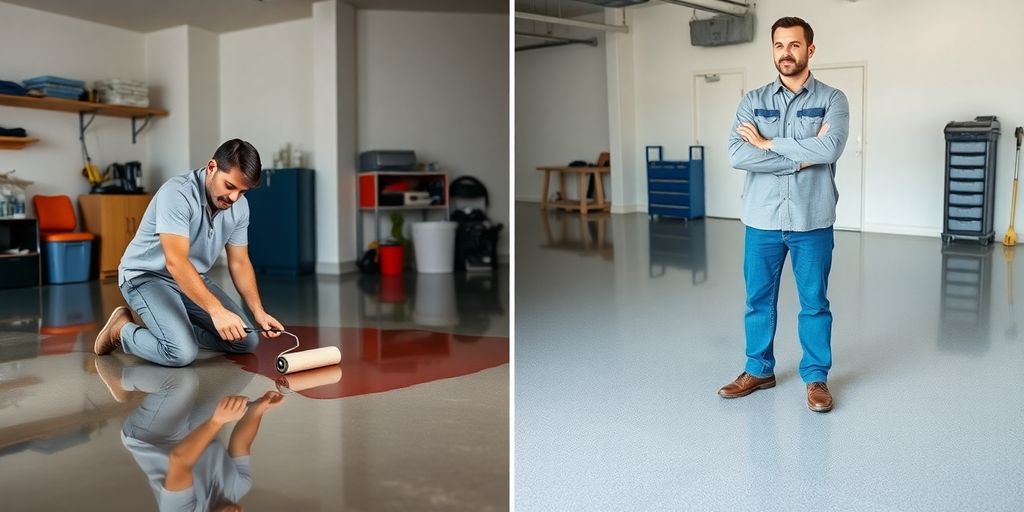
Before you even think about cracking open that epoxy kit or calling a professional, take a good, hard look at your own abilities. Are you the type who thrives on DIY projects, or do you usually end up calling for backup? This is a crucial step because epoxy flooring isn’t as simple as slapping on a coat of paint. It requires a certain level of skill and attention to detail to get right. Let’s break down the key areas you need to consider.
Required Preparation Skills
Surface preparation is where many DIY attempts go wrong. It’s not just about sweeping the floor; it’s about creating a perfectly clean, smooth, and porous surface for the epoxy to bond to. This often involves:
- Grinding the concrete: This removes any existing coatings, contaminants, and imperfections. Do you have experience with a concrete grinder? Are you comfortable using one safely?
- Patching cracks and holes: Concrete isn’t always perfect. You’ll need to fill any imperfections with a concrete patching compound. Can you achieve a smooth, level finish?
- Cleaning and degreasing: Even after grinding and patching, the surface needs to be thoroughly cleaned to remove any dust, debris, or grease. Do you know the proper cleaning agents to use?
If the prep work is subpar, the epoxy won’t adhere properly, leading to peeling, bubbling, and other issues down the line. It’s like building a house on a weak foundation – it might look good at first, but it won’t last.
Application Techniques
Applying epoxy isn’t just pouring it on the floor and spreading it around. It requires specific techniques to ensure a smooth, even, and durable finish. Here’s what you need to be comfortable with:
- Mixing epoxy: Epoxy is a two-part system that needs to be mixed precisely according to the manufacturer’s instructions. Too much or too little of either component can ruin the entire batch. Are you comfortable with precise measurements and mixing techniques?
- Pouring and spreading: The epoxy needs to be poured evenly across the surface and spread with a squeegee or notched trowel. Can you maintain a consistent thickness and avoid creating ridges or puddles?
- Back rolling: After spreading, the epoxy needs to be back rolled with a spiked roller to remove any air bubbles. Do you have the proper roller and know how to use it effectively?
Getting the application right is key to a professional-looking floor. Uneven application can lead to weak spots, discoloration, and an overall unprofessional appearance. It’s a skill that takes practice to master.
Troubleshooting Potential Issues
Even with the best preparation and application, things can still go wrong. Bubbles, fish eyes, uneven curing – these are just a few of the potential problems you might encounter. The question is, are you prepared to deal with them? Here are some things to consider:
- Identifying the problem: Can you accurately diagnose the cause of the issue? Is it a mixing problem, a surface contamination issue, or something else?
- Finding the solution: Do you know the proper steps to take to fix the problem? Do you have the necessary tools and materials on hand?
- Implementing the fix: Can you execute the solution effectively without making the problem worse?
Having the ability to troubleshoot issues on the fly can save you time, money, and a whole lot of frustration. If you’re not comfortable with problem-solving, hiring a professional might be the better option. They have the experience to anticipate and address potential issues before they become major headaches. For example, they know how to properly apply floor coatings to ensure a durable finish.
| Skill | DIY Confidence Level | Professional Recommendation |
|---|---|---|
| Surface Preparation | High | Consider DIY |
| Application Techniques | Medium | Lean towards Professional |
| Troubleshooting | Low | Definitely Professional |
Making an Informed Decision for Your Home
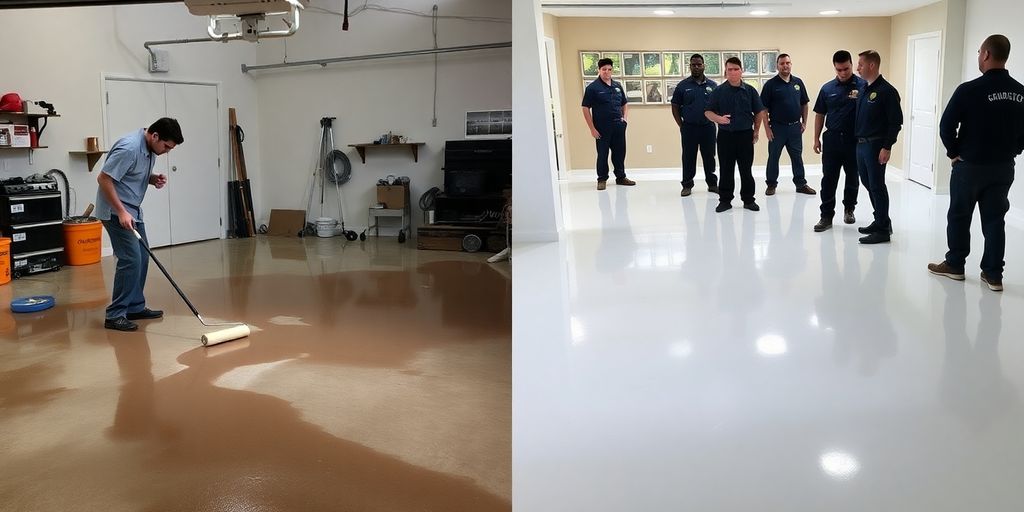
Okay, so you’ve weighed the pros and cons, looked at your budget, and maybe even watched a few too many YouTube videos about epoxy flooring. Now it’s time to actually decide. It’s not just about saving a few bucks or getting that perfect, glossy finish; it’s about what’s right for your home and your lifestyle. Let’s break it down.
Weighing Pros and Cons
Let’s be real, there’s no one-size-fits-all answer. DIY epoxy flooring cost savings can be tempting, but are you truly prepared for the potential headaches? On the other hand, hiring a pro guarantees a certain level of quality, but it’ll definitely hit your wallet harder. Think about what matters most to you. Is it saving money upfront, or having a floor that lasts for years without issues? Here’s a quick recap:
- DIY Pros: Lower initial cost, personal satisfaction, complete control.
- DIY Cons: Time-consuming, potential for mistakes, requires skill.
- Professional Pros: High-quality results, time-efficient, warranty.
- Professional Cons: Higher cost, less control.
Assessing Personal Needs
What do you really need from your epoxy floor? Is it for a high-traffic garage, a decorative living room, or a functional basement? The demands of each space are different, and that should influence your decision. A garage might prioritize durability and resistance to chemicals, while a living room might focus more on aesthetics. Consider these questions:
- How much foot traffic will the floor endure?
- Will it be exposed to chemicals, oils, or other harsh substances?
- What kind of aesthetic are you aiming for?
Prioritizing Durability and Aesthetics
Ultimately, the best epoxy flooring job balances durability and aesthetics. You want a floor that looks great, but also stands up to the wear and tear of daily life. If you’re willing to invest more upfront for a professional job, you’re likely to get both. If you’re going the DIY route, be prepared to compromise, or put in extra effort to ensure a long-lasting, beautiful finish.
Think about the long game. A poorly installed epoxy floor might look okay at first, but it could start peeling, cracking, or yellowing within a year or two. That’s money down the drain. A professionally installed floor, on the other hand, could last for a decade or more with proper care. It’s an investment, not just an expense.
Picking the right floor for your home is a big deal. You want something that looks good, lasts a long time, and fits your budget. Our epoxy floors are super strong and come in many cool styles. They’re perfect for any room, from your garage to your living space. Don’t guess what’s best; find out for sure! Visit our website to learn more about how epoxy flooring can make your home better.
So, DIY or Pro? It’s Your Call!
Alright, so we’ve looked at both sides of the coin for epoxy flooring. Doing it yourself can save you some cash, and hey, there’s a real sense of pride in finishing a big project like that. You get to control everything, which is pretty cool. But let’s be real, it’s not always a walk in the park. There’s a good chance you’ll run into problems, and fixing mistakes can end up costing more than you saved. Plus, it takes a lot of time, and you might not get that super smooth, perfect look a pro can deliver. On the flip side, hiring a professional means you’re pretty much guaranteed a great-looking, long-lasting floor. They’ve got the right tools and know-how to handle anything that comes up. Sure, it costs more upfront, but you’re paying for peace of mind and a job done right. So, when you’re trying to figure out what’s best for your home, think about your budget, how much time you’ve got, and how perfect you want that floor to look. There’s no single right answer, just what works for you.
Frequently Asked Questions
What exactly is epoxy flooring?
Epoxy flooring is a special kind of floor covering made from a mix of resin and a hardener. When these two parts are mixed, they create a strong, durable, and shiny surface. It’s often used in garages, basements, and even businesses because it’s tough and looks good.
Why would someone try to install epoxy flooring themselves?
The biggest reason people try DIY is to save money on labor. You also get to pick everything yourself and feel proud when it’s done. It can be a fun project if you like to build things.
What are the main problems with doing epoxy flooring yourself?
DIY epoxy jobs can go wrong easily. If you don’t prepare the floor right or mix the epoxy correctly, you might end up with bubbles, uneven spots, or peeling. Fixing these mistakes can cost more than hiring a pro in the first place.
What’s the benefit of hiring a professional for epoxy flooring?
Professionals have lots of experience and special tools. They know how to handle tricky situations like cracks or moisture in the floor. This means you’ll get a smooth, long-lasting, and good-looking floor without the headaches.
How do I know if my project is too big for DIY?
Think about how big the area is, if your current floor is in good shape, and how perfect you want the final look to be. A larger or damaged floor might be too much for a DIY project. The more complex the job, the more you might need a pro.
Should I consider my budget and time when deciding?
It depends on your budget and how much time you have. DIY saves money upfront but might take a lot of your time and could lead to costly fixes if done wrong. Professionals cost more at first but usually give you a perfect, durable floor that lasts for years, saving you money in the long run.