When it comes to choosing the right flooring for your space, epoxy flooring and polished concrete are two popular options. Both have their unique advantages and can serve different purposes depending on your needs. Whether you’re looking for durability, cost-effectiveness, or aesthetic appeal, understanding the differences between these two flooring types can help you make an informed decision. Let’s dive into the key takeaways from comparing epoxy flooring with polished concrete.
Key Takeaways
- Epoxy flooring is great for areas needing chemical resistance and can handle heavy traffic, making it ideal for industrial spaces.
- Polished concrete offers a sleek, shiny finish that works well in homes and commercial spaces with existing concrete surfaces.
- Maintenance for epoxy floors is generally straightforward, while polished concrete may require occasional resealing.
- Epoxy tends to have higher upfront costs but offers durability and customization options that justify the investment.
- Polished concrete is often more budget-friendly initially but might not offer the same level of durability as epoxy.
Understanding Epoxy Flooring
What is Epoxy Flooring?
Epoxy flooring is a type of surface that combines epoxy resin with a hardening agent to create a sturdy, protective layer over concrete floors. This mixture results in a finish that’s not only strong but also resistant to chemicals and wear. It’s like giving your floor a superhero cape! Often used in commercial and industrial settings, epoxy coatings provide an extra layer of protection, enhancing the floor’s durability and longevity.
Types of Epoxy Flooring
There are several types of epoxy flooring to choose from, each with its own unique characteristics:
- Self-Leveling Epoxy: Ideal for creating a smooth, seamless surface over new or old concrete floors.
- Epoxy Mortar: The most robust option, perfect for repairing cracks before applying other types of epoxy.
- Quartz-Filled Epoxy: Combines epoxy polymer and quartz grains, often used for decorative spaces.
- Anti-Static Epoxy: Designed for areas where static-sensitive equipment is used.
- Epoxy Flake: Incorporates colored flakes to create a vibrant, multi-hued finish.
Benefits of Epoxy Flooring
Epoxy flooring offers numerous advantages:
- Durability: Capable of withstanding heavy foot and machinery traffic, water, and chemical spills.
- Aesthetic Appeal: Available in various colors and styles, allowing for extensive customization.
- Ease of Maintenance: Requires minimal upkeep beyond regular cleaning.
- Environmental Friendliness: Increases light reflectivity, reducing the need for additional lighting.
Epoxy flooring isn’t just about toughness; it’s about transforming a space with style and resilience. Whether you’re looking to upgrade a garage, warehouse, or even a commercial kitchen, epoxy flooring offers both form and function in one neat package.
Exploring Polished Concrete
What is Polished Concrete?
Polished concrete is essentially your regular concrete floor, but with a twist. It’s ground down using diamond pads until it’s smooth and shiny. This process not only makes the floor look sleek but also strengthens it. The polishing can vary from a light sheen to a high gloss, depending on what you’re going for. It’s a popular choice in homes, offices, and retail spaces because it takes the durability of concrete and adds a touch of elegance.
Advantages of Polished Concrete
Polished concrete floors come with a bunch of perks:
- Attractiveness: They give your space a modern, clean look. The polished surface enhances the natural beauty of concrete.
- Energy Efficiency: Polished concrete can reflect more light, which means you might not need as much artificial lighting.
- Customizability: You can choose the level of sheen you want, from matte to high gloss, and even add colors or patterns.
- Eco-Friendly: The process doesn’t involve harmful chemicals, making it a greener choice.
Common Uses for Polished Concrete
Polished concrete is versatile and can be used in various settings:
- Residential Spaces: Perfect for living rooms, kitchens, and basements.
- Commercial Areas: Ideal for retail stores, restaurants, and office buildings.
- Industrial Settings: Due to its durability, it’s great for warehouses and factories.
Polished concrete offers a blend of beauty and strength, making it a top choice for many different environments. Its ability to enhance light and its low maintenance needs make it a practical yet stylish flooring option.
Comparing Durability and Maintenance
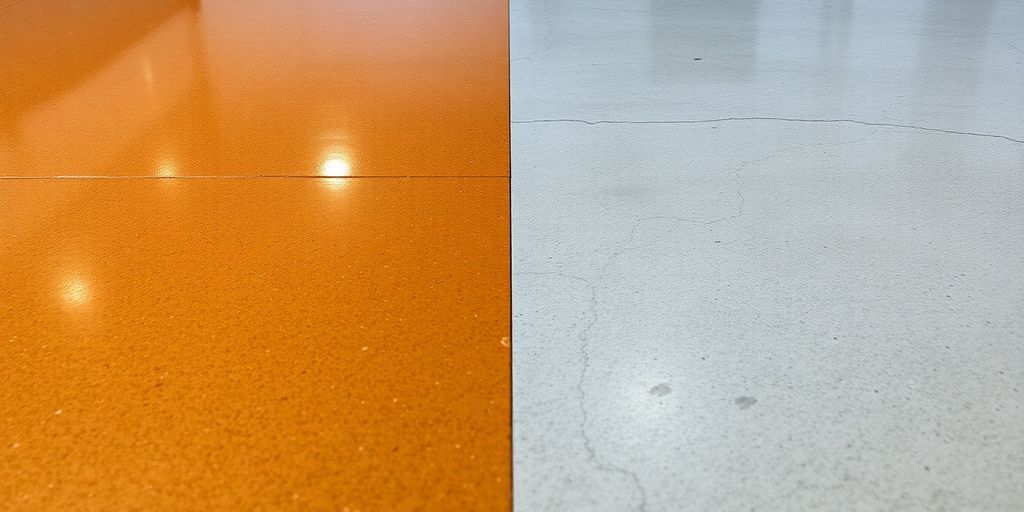
Durability of Epoxy Flooring
Epoxy flooring is known for its resilience, especially in industrial and commercial settings. It acts as a tough coating that can withstand impacts, making it ideal for areas with heavy machinery or frequent foot traffic. However, it’s not invincible. Sharp or heavy objects can still damage it, so regular inspections and maintenance are key to keeping it in top shape.
Durability of Polished Concrete
Polished concrete is a powerhouse when it comes to durability. Once it sets, it becomes as strong as natural stone. It’s perfect for high-traffic areas like offices and retail spaces because it doesn’t chip or crack easily. Plus, its resistance to moisture and mold makes it a reliable choice for various environments. While it’s tough, it might not be the best option where chemical spills are a concern.
Maintenance Requirements
Both epoxy and polished concrete floors are relatively easy to maintain. For polished concrete, a simple dust mop daily keeps it looking sharp. You can also use water and a nonabrasive pad for deeper cleaning. Epoxy floors are similar; a soft broom or dust mop does the trick. For tougher cleaning, pressure washing is an option if the floor is properly sealed. Just avoid acidic cleaners on both surfaces to prevent damage.
Choosing between epoxy and polished concrete often depends on the specific needs of your space. Consider what kind of traffic and wear your floor will face before making a decision. Polished concrete and epoxy differ in durability, particularly regarding their resistance to wear, scratches, and chemical spills.
Cost Considerations for Flooring Options
Initial Costs of Epoxy Flooring
Epoxy flooring can be a budget-friendly choice, particularly for those looking to enhance their garage floors. It’s generally cheaper to apply epoxy resin compared to installing polished concrete. The cost varies based on the type of epoxy you choose, such as water-based or 100% solids. Water-based epoxy is often the least expensive option, making it a popular choice for DIY enthusiasts. However, for a more durable finish, you might consider investing in 100% solids or metallic epoxy, which can be pricier.
Long-term Costs of Polished Concrete
Polished concrete might have a higher initial cost, but it offers long-term savings. Once installed, it requires minimal maintenance, reducing ongoing expenses. This makes it a cost-effective solution over time, especially in high-traffic areas. The durability of polished concrete means fewer repairs or replacements, which can save money in the long run.
Budgeting for Your Flooring Choice
When deciding between epoxy and polished concrete, consider both upfront and long-term costs. For those prioritizing initial affordability, epoxy might be the way to go. However, if you’re looking at the big picture, polished concrete could be more economical due to its low maintenance needs. It’s important to assess how the flooring will be used and the budget available to make the best decision. For garage flooring options, understanding the specific needs and conditions of your space can guide you in choosing the right type of epoxy or deciding if polished concrete is a better fit.
Aesthetic and Customization Options
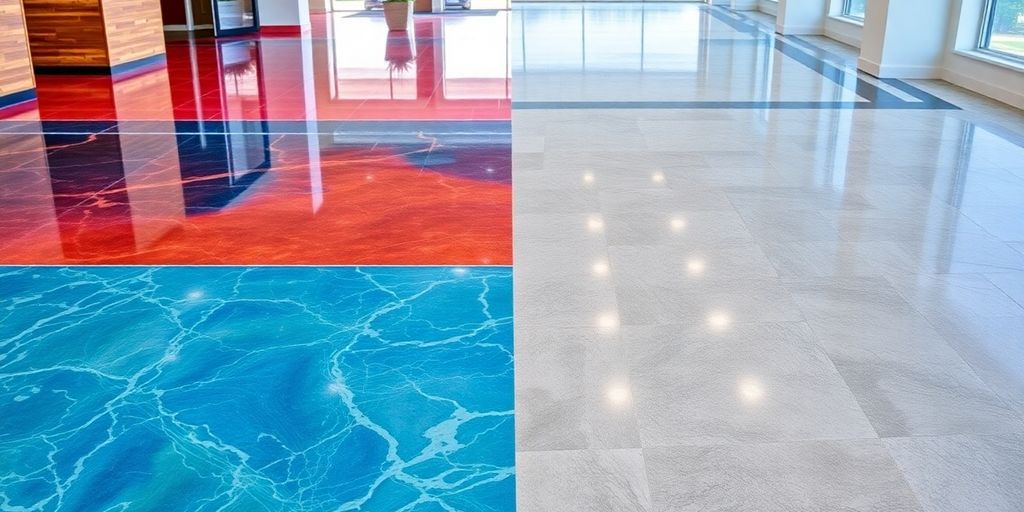
Design Flexibility with Epoxy
Epoxy flooring is like a blank canvas for your floor. You can choose from a wide range of colors and patterns, making it super easy to match any room’s vibe. Whether you’re going for a sleek, modern look or something more vibrant, epoxy has got you covered. With its seamless finish, it not only looks good but is also easy to clean. Epoxy flooring offers customizable aesthetics with a wide range of colors and patterns, allowing for personal expression in any space. This flooring option serves as a stylish investment that combines beauty and functionality.
Customization Possibilities with Polished Concrete
Polished concrete might sound plain, but it’s anything but. You can stain it in different colors, add scoring, or even create a high-gloss finish that reflects light beautifully. It’s perfect for those who want a unique but subtle look. Plus, it’s durable and low-maintenance, which is always a win.
Choosing the Right Look for Your Space
When deciding between epoxy and polished concrete, think about the overall feel you want for your space. Epoxy is great if you want something bold and customizable. On the other hand, polished concrete offers a more understated elegance. Consider the function of the room too—epoxy might be better for high-traffic areas due to its durability.
Environmental Impact and Sustainability
Eco-friendly Aspects of Epoxy Flooring
Epoxy flooring has the potential to be environmentally friendly, but it largely depends on the type of epoxy used. Some epoxy coatings are crafted from organic resins and hardeners, which minimize environmental contamination. However, not all epoxy products are created equal. It’s crucial to ensure that the epoxy being used is free from harmful chemicals that could pose environmental risks. Before installation, ask your contractor about "green" epoxies, which are designed to be more eco-friendly.
Sustainability of Polished Concrete
Polished concrete is often hailed as an environmentally friendly flooring option. Its production requires fewer raw materials, primarily water-based hardeners and stain-resistant treatments. Unlike other flooring materials, polished concrete does not emit volatile organic compounds (VOCs), making it a healthier choice for indoor environments. Additionally, the polishing process seals the surface, preventing the formation of efflorescence—a common issue with untreated concrete.
Making an Environmentally Conscious Choice
When choosing between epoxy flooring and polished concrete, consider the environmental impact of each option. Here are some points to keep in mind:
- Material Source: Polished concrete uses minimal raw materials, while epoxy’s eco-friendliness depends on its composition.
- Indoor Air Quality: Both options can improve indoor air quality, but polished concrete has the edge due to its lack of VOC emissions.
- Longevity and Maintenance: Both flooring types offer long-lasting solutions, reducing the need for frequent replacements and minimizing environmental waste.
Ultimately, your choice should align with your environmental values and the specific needs of your space. Whether you prioritize the natural appeal of polished concrete or the customizable features of epoxy, both offer sustainable benefits in their own right.
Safety and Suitability for Different Spaces
Safety Features of Epoxy Flooring
Epoxy flooring is known for its durability and resistance to spills and heavy use, making it a safe choice for industrial settings. It is engineered to withstand chemicals, water, and heavy foot and machinery traffic. This makes it ideal for environments where spills are common, like garages and warehouses. Plus, epoxy’s slip-resistant surface can be enhanced with additives to improve grip, providing an extra layer of safety.
- Chemical resistance
- Slip resistance with additive options
- Withstands heavy machinery traffic
Epoxy flooring not only meets the demands of industrial spaces but also offers peace of mind with its robust safety features.
Suitability of Polished Concrete for Various Environments
Polished concrete is a versatile option that fits well in both commercial and residential spaces. Its glossy finish enhances the aesthetic appeal while maintaining a high level of slip resistance. This makes it a reliable choice for areas with high foot traffic, like retail stores and offices. However, it can become slippery when wet, so it’s important to consider the environment.
- Ideal for commercial spaces
- High aesthetic appeal
- Slip-resistant but can be slippery when wet
Choosing the Right Flooring for Your Needs
Deciding between epoxy and polished concrete depends on the specific needs of your space. For areas that face chemical exposure or require a more robust surface, epoxy is often the better choice. On the other hand, if you’re looking for an economical, stylish solution that can handle foot traffic, polished concrete might be the way to go. Consider factors like budget, usage, and maintenance when making your decision.
- Assess the environment and usage
- Consider budget constraints
- Evaluate maintenance requirements
When considering flooring options, it’s important to think about safety and suitability for your space. Epoxy flooring is a fantastic choice for both homes and businesses, offering durability and style. If you’re ready to transform your floors, visit our website for more information and to get started today!
Conclusion
When it comes down to choosing between epoxy flooring and polished concrete, it really depends on what you need for your space. If you’re looking for something that can handle a lot of foot traffic and still look good, polished concrete might be your best bet. It’s a solid choice for homes and offices where style and durability go hand in hand. On the other hand, if your space is more about heavy-duty use, like a garage or a factory, epoxy flooring could be the way to go. It’s tough, resistant to chemicals, and can take a beating. Both options have their perks and drawbacks, so think about what matters most for your space and budget. At the end of the day, whether you go for the sleek shine of polished concrete or the robust protection of epoxy, you’re making a choice that will serve your needs for years to come.
Frequently Asked Questions
What is epoxy flooring?
Epoxy flooring is a type of floor covering that involves applying multiple layers of epoxy resin over a concrete surface. This creates a hard, durable finish that’s resistant to wear and tear.
What are the benefits of polished concrete?
Polished concrete floors are strong and durable, making them great for high-traffic areas. They also have a shiny finish that can brighten up a room and are easy to clean.
How do I maintain epoxy flooring?
To keep epoxy floors looking good, regularly sweep and mop them. Avoid using harsh chemicals, and clean up spills quickly to prevent stains.
Is polished concrete slippery when wet?
Yes, polished concrete can be slippery when wet, so it’s important to be careful, especially in areas that might get wet often.
Which is more cost-effective: epoxy or polished concrete?
Polished concrete is usually less expensive upfront, but epoxy flooring may offer more durability and protection in the long run, which can save money on repairs.
Can you customize the look of epoxy flooring?
Yes, epoxy flooring is available in various colors and patterns, so you can customize it to match your space’s style.