Facts about Epoxy Flooring You Need To Know
Epoxy is an incredibly versatile flooring solution suitable for various environments, including commercial, industrial, educational, and healthcare facilities. Its adaptability allows it to meet a wide range of conditions and requirements.
If you’re not yet acquainted with epoxy floor coatings and their numerous benefits, here are 10 essential things to know:
Durability: Epoxy floors are known for their exceptional durability, making them ideal for high-traffic areas.
Resistance: They offer excellent resistance to chemicals, stains, and moisture, ensuring longevity even in harsh conditions.
Safety: With anti-slip additives, epoxy floors can provide a safe walking surface, reducing the risk of accidents.
Aesthetic Appeal: Available in a variety of colors and finishes, epoxy flooring can enhance the visual appeal of any space.
Ease of Maintenance: Epoxy floors are easy to clean and maintain, saving you time and effort.
Cost-Effective: Their long lifespan and minimal maintenance needs make epoxy flooring a cost-effective option.
Quick Installation: Professional installation of epoxy flooring can be completed relatively quickly, minimizing downtime for your business.
Environmentally Friendly: Many epoxy products are low in VOCs (volatile organic compounds), making them an environmentally friendly choice.
Customizable: Epoxy flooring can be tailored to meet specific requirements, including different textures, colors, and designs.
Enhanced Functionality: It can improve the functionality of your space by creating a seamless, hygienic, and professional environment.
Understanding these advantages can help you make an informed decision about whether epoxy flooring is the right choice for your facility. Here at Richardson Epoxy Flooring we are experts in the correct installation of epoxy floors.
Here is some more detailed information about epoxy flooring.
The Strength Of Epoxy Comes From The Chemical Bond Between It's Components
An epoxy coating consists of two components: a polyepoxide resin and a hardener. These are combined just before application to your floor. The mixture undergoes a chemical reaction, causing it to bond both to the floor and within itself.
This process results in a coating that is remarkably robust, offering strength greater than its individual components. When correctly applied to a properly cleaned and prepared surface, epoxy is incredibly durable and resistant to peeling or chipping.
It's Very Important To Do Surface Preparation Correctly
Surface preparation is very important, we can’t cover all the requirements here. However, it’s crucial to understand that poor or insufficient surface prep can lead to immediate failure of your epoxy floor.
Moisture is a major issue. High humidity or vapor in the concrete can hinder the formation of adhesive bonds and significantly delay the curing process. Therefore, it is essential to conduct a professional moisture test beforehand and address any issues before applying epoxy.
There's a big difference between a "flooring" and just a "coating"
Although we often use the terms interchangeably, for an epoxy application to qualify as “flooring,” it must be at least two millimeters thick. Anything thinner is considered an epoxy “coating.”
The distinction lies in their functions: epoxy flooring offers additional structural support, whereas a coating merely provides a protective layer.
Most hard floors can be covered with epoxy flooring
While epoxy is commonly applied to concrete floors, it can also be used to protect other hard surfaces, such as metal and wood subflooring. However, proper surface preparation is crucial to ensure the epoxy bonds correctly to these surfaces
Floors that have epoxy surfaces can be extremely attractive, even beautiful
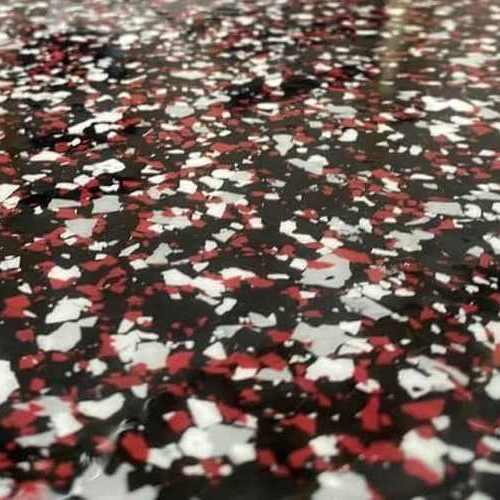
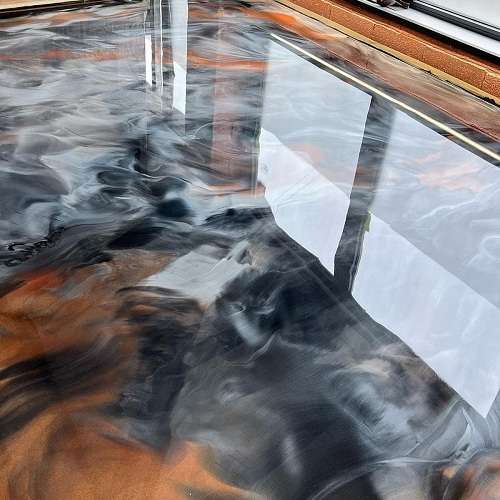
The term “industrial floor coatings” might not evoke thoughts of beauty, but epoxy floors are available in a wide array of stunning shades, colors, and effects. For instance, you can choose an epoxy with a metallic sheen that mimics a shimmering ocean or desert landscape, making a bold visual statement. Additionally, different colors can be applied in layers, creating vibrant patterns that illuminate your facility.
There are many options using epoxy, such as non slip surfaces
The possibilities with epoxy are virtually limitless. Non-slip layers can be created by embedding quartz, and a urethane topcoat can be applied to seal the epoxy, resulting in one of the most durable commercial surfaces available.
It's important to allow epoxy enough time to cure correctly
Epoxy may seem to “set” quickly, but it isn’t truly ready just because it appears hard. It needs at least 18 to 24 hours before it can be safely walked on. Complete curing, where epoxy reaches its final form and hardness, can take up to 30 days.
Cooler temperatures slow down this process. In fact, applying epoxy in temperatures below 60°F is not recommended, as the curing process takes much longer and can lead to issues.
Not all epoxies are equal, don't use cheap products
Cheaper epoxies contain only 30% to 40% solids by volume, meaning that after drying, you are left with 40% or less of the initial thickness. Professional-grade products, on the other hand, typically have 90% to 100% solids by volume, resulting in a superior final product with greater thickness.
It’s also crucial not to cut corners on labor costs. While a DIY approach might be suitable for a home garage, it’s too risky for your business floors. Hiring an experienced crew to install your epoxy floor is a wise investment, ensuring the job is done correctly and avoiding costly mistakes or subpar results
Free No Obligation Quotes