When it comes to warehouse flooring, durability is key. You need a surface that can handle heavy machinery, foot traffic, and spills without falling apart. That’s where epoxy floor coating for warehouses comes in. This type of flooring not only stands up to the wear and tear of a busy warehouse but also enhances safety and reduces maintenance costs. In this article, we’ll explore the many benefits of epoxy floor coating and why it’s a smart choice for any warehouse operation.
Key Takeaways
- Epoxy floor coating is highly durable, making it ideal for heavy-duty warehouse environments.
- It offers excellent chemical and impact resistance, protecting the underlying concrete.
- The slip-resistant options enhance safety, reducing the risk of workplace accidents.
- Epoxy flooring requires minimal maintenance, leading to long-term cost savings.
- Customization options allow for aesthetic enhancements while maintaining functionality.
The Advantages of Epoxy Floor Coating for Warehouses
Durability and Longevity
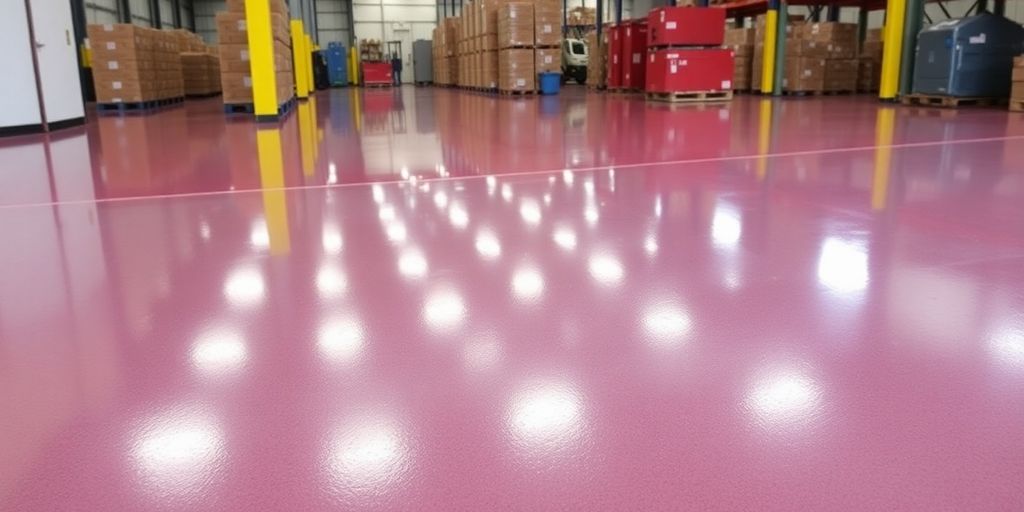
Warehouse floors take a beating, right? Forklifts, heavy equipment, constant foot traffic – it all adds up. That’s where epoxy floor coatings come in. They’re seriously tough. They can handle the weight and abuse without cracking or chipping. This means your concrete underneath stays protected, and you won’t be dealing with repairs all the time. It’s a long-term solution that saves you money and hassle.
Chemical Resistance
Warehouses often deal with spills – oils, solvents, you name it. Regular concrete just soaks that stuff up, leading to stains and damage. Epoxy is different. It’s like a shield against chemicals. It doesn’t absorb them, so you can easily clean up spills without worrying about lasting damage. This is especially important if you’re handling anything hazardous. It keeps your warehouse safer and cleaner.
Impact Resistance
Things get dropped. It’s a fact of warehouse life. But with epoxy flooring, you don’t have to freak out every time something heavy hits the floor. Epoxy provides excellent impact resistance. It protects the concrete from damage caused by dropped items or heavy loads. This impact resistance minimizes the need for frequent repairs or floor replacements, saving both time and money.
Think of it this way: investing in epoxy flooring is like buying a really good case for your phone. Sure, it costs a little more upfront, but it protects your investment from damage and saves you from having to replace it down the road.
Enhancing Safety with Epoxy Flooring
Safety in a warehouse isn’t just about following regulations; it’s about creating an environment where people can work without constant worry. Epoxy flooring can really step up your safety game. It’s not just about a pretty floor; it’s about preventing accidents and keeping your team safe.
Slip-Resistant Coating
Slips and falls are a major cause of warehouse injuries. Epoxy floors can be treated with additives to create a slip-resistant surface. This is especially important in areas where spills are common. Think about it: a simple spill shouldn’t mean a trip to the emergency room. With the right epoxy coatings, you can significantly reduce the risk of slips, even when things get a little messy.
Improved Visibility
Warehouse lighting can sometimes be dim, making it hard to see potential hazards. Epoxy floors often have a glossy finish that reflects light, brightening up the space. This improved visibility can help workers spot obstacles and avoid accidents. It’s a simple change that can make a big difference in preventing trips and falls. Plus, a brighter warehouse just feels more welcoming and less stressful.
Reduced Workplace Accidents
Epoxy flooring contributes to a safer work environment in several ways. By providing a smooth, even surface, it eliminates tripping hazards. The seamless nature of epoxy means there are no cracks or uneven spots to catch your feet. And, as mentioned before, the slip-resistant options and improved visibility further reduce the risk of accidents. It’s all about creating a space where workers can focus on their jobs without constantly worrying about their footing.
Investing in epoxy flooring is an investment in your employees’ well-being. A safer workplace leads to happier, more productive workers. It also reduces the risk of costly accidents and downtime. It’s a win-win for everyone involved.
Cost-Effectiveness of Epoxy Floor Coating
Long-Term Savings
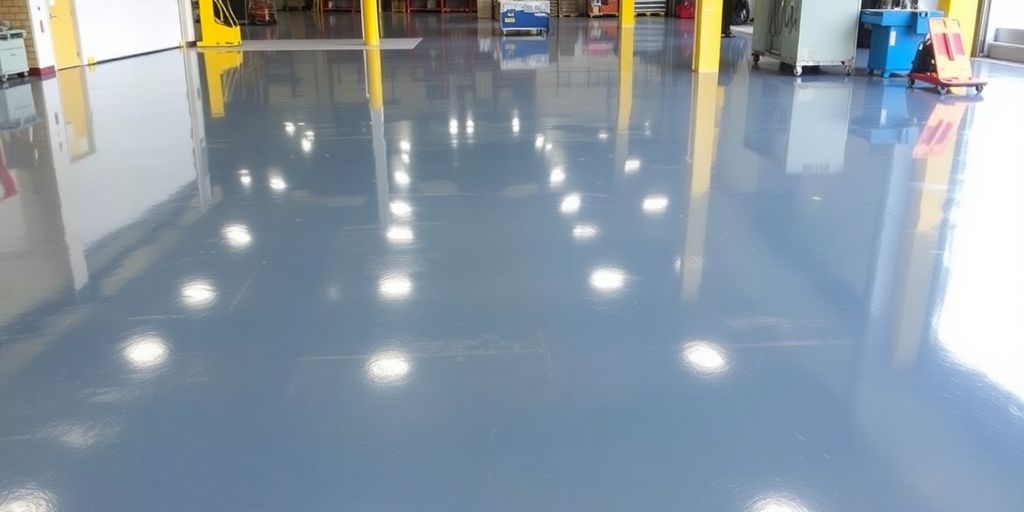
Okay, so, yeah, epoxy flooring might seem like a bigger spend upfront compared to other options. But think about it this way: it’s an investment. The real value pops up over time because you’re not constantly fixing or replacing it. Regular floors? They get beat up, stained, and need replacing way sooner. Epoxy? It’s in it for the long haul. It’s like buying a really good pair of boots – you pay more at first, but they last for years, saving you money in the long run. Plus, you can get epoxy floor coating in all sorts of colors.
Low Maintenance Requirements
Let’s be real, who wants to spend all their time cleaning floors? Not me, and probably not you either. Epoxy floors are super easy to take care of. They’re seamless, so there are no grout lines to scrub. Just sweep or mop, and you’re good to go. This means less time spent on upkeep and fewer cleaning supplies needed. Less work, less money spent – it’s a win-win.
- Easy to clean surface
- Reduces the need for harsh chemicals
- Saves time and labor costs
Minimized Downtime
Warehouse downtime is a killer. Every minute your warehouse isn’t running, you’re losing money. When you need to repair or replace a floor, that means shutting down operations. Epoxy floors? They’re tough. They resist damage, so you won’t need to shut down for repairs nearly as often. This keeps your warehouse running smoothly and your profits flowing. Plus, the application techniques are pretty straightforward.
Think of it like this: a small leak can sink a great ship. Constant repairs and replacements are like those small leaks, slowly draining your resources. Epoxy flooring is like patching those leaks and reinforcing the hull, keeping your business afloat and thriving.
Maintenance Tips for Epoxy Floors
Regular Inspections
Keeping an eye on your epoxy floors is key to their longevity. I usually tell people to check for any signs of wear and tear at least once a month. Look for small cracks, chips, or areas where the coating might be starting to peel. Catching these problems early can prevent bigger, more expensive repairs down the road. It’s like going to the dentist – a little check-up now can save you from a root canal later!
Cleaning Recommendations
When it comes to cleaning, less is often more. You don’t need fancy, expensive cleaners to keep your epoxy floors looking great. Here’s what I do:
- Weekly Mopping: Use a soft mop and warm water mixed with a mild detergent. I like to use dish soap because it’s gentle and effective.
- Avoid Harsh Chemicals: Stay away from cleaners that contain ammonia, bleach, or vinegar. These can dull the finish and damage the epoxy over time. Think of it like washing your car – you wouldn’t use sandpaper, would you?
- Spot Cleaning: For spills, clean them up right away with a soft cloth or paper towel. The longer a spill sits, the more likely it is to stain or damage the floor. Epoxy coatings are pretty resistant, but it’s always better to be safe than sorry.
Repairing Minor Damage
Even with the best care, minor damage can happen. Here’s how I handle it:
- Small Chips: For small chips, you can usually repair them yourself with an epoxy repair kit. These kits are available at most hardware stores and come with everything you need to patch up the damage.
- Cracks: If you notice cracks, it’s important to address them quickly. Small cracks can be filled with an epoxy crack filler. For larger cracks, you might need to consult a professional.
- Professional Help: Don’t be afraid to call in the pros for bigger problems. Sometimes, it’s better to let someone with experience handle the repairs to ensure they’re done correctly.
I always tell people that maintaining epoxy floors is like taking care of a good pair of shoes. A little bit of regular cleaning and maintenance can keep them looking great for years to come. Don’t wait until the damage is done – be proactive and take care of your floors!
Customization Options for Epoxy Flooring
Epoxy flooring isn’t just about toughness; it’s also about making your warehouse look exactly how you want. You’ve got a ton of choices to make it your own. It’s pretty cool how you can really dial in the look and feel.
Color Choices
Forget boring gray concrete! With epoxy, you can pick almost any color you can imagine. Want to match your company’s brand? No problem. Need to designate different zones in your warehouse? Use different colors! The possibilities are pretty much endless. You can go with a solid color for a clean, uniform look, or get creative with color combinations.
Textured Finishes
Beyond color, you can also choose different textures for your epoxy floor. This isn’t just about looks; it’s about safety too. A textured finish can make the floor slip-resistant, which is super important in a busy warehouse. Plus, different textures can give a totally different vibe to the space. For example, you can use solid color epoxy flooring to create a safe and visually appealing surface.
Design Patterns
Want to get really fancy? You can incorporate design patterns into your epoxy floor. Think logos, directional arrows, or even intricate designs. This is a great way to add some personality to your warehouse and make it a more visually interesting place to work. It can also help with organization and safety by clearly marking different areas. Some recent jobs have included epoxy.
Epoxy flooring is a great way to customize your warehouse to fit your specific needs and style. It’s durable, safe, and looks great. What’s not to love?
The Installation Process of Epoxy Coating
Okay, so you’re thinking about getting epoxy flooring installed? It’s not quite as simple as slapping down some paint, but it’s also not rocket science. Here’s a breakdown of what to expect.
Surface Preparation
This is where it all starts, and honestly, it’s the most important part. If the surface isn’t prepped right, the epoxy won’t stick, and you’ll have a mess on your hands. Think of it like painting – you wouldn’t paint over a dirty wall, right? Same idea here. The concrete needs to be clean, dry, and a little rough so the epoxy has something to grab onto. This usually involves:
- Cleaning: Getting rid of all the dirt, grease, and any old coatings.
- Grinding: Using a concrete grinder to open up the pores of the concrete.
- Repairing: Filling in any cracks or holes. You can use a concrete patching compound for this.
Application Techniques
Once the surface is ready, it’s time to mix and apply the epoxy. This usually involves two parts that you mix together. Follow the manufacturer’s instructions exactly. Too much of one part or the other, and the epoxy won’t cure properly. Then:
- Mix the epoxy: Use a drill with a mixing attachment to thoroughly combine the resin and hardener.
- Pour the epoxy: Distribute the mixed epoxy evenly across the floor.
- Spread the epoxy: Use a squeegee or notched trowel to spread the epoxy to the desired thickness. This is where experience helps to get a smooth, even coat.
- Backroll: Use a roller to remove any bubbles and ensure a uniform finish. Some people like to add decorative flakes at this stage.
Curing Time
After the epoxy is applied, you have to let it cure. This is basically the epoxy hardening and forming a solid, durable surface. The curing time depends on the type of epoxy and the temperature, but it’s usually at least 24-72 hours. Don’t walk on it or put anything heavy on it during this time! You might want to consider epoxy flooring for your warehouse.
It’s really important to follow the manufacturer’s instructions for the specific epoxy you’re using. Different epoxies have different mixing ratios, application techniques, and curing times. Ignoring these instructions can lead to a failed installation, which means you’ll have to start all over again. And nobody wants that.
Comparing Epoxy to Other Flooring Solutions
When deciding on the best flooring for a warehouse, it’s important to look at all the options. Epoxy flooring is a popular choice, but how does it stack up against other common solutions? Let’s take a look.
Concrete Flooring
Concrete is often the base upon which other flooring is installed, but it can also be used as a standalone option. While concrete is durable, it’s porous and can absorb stains and moisture. Epoxy provides a non-porous, protective layer that concrete lacks. Concrete is also prone to cracking and can be dusty, requiring regular sealing. Epoxy, on the other hand, creates a seamless, easy-to-clean surface.
Vinyl Flooring
Vinyl flooring, especially in sheet or tile form, is another common choice for commercial spaces. It’s relatively inexpensive and comes in a wide variety of styles. However, vinyl is not as durable as epoxy and can be easily scratched, torn, or punctured. It also doesn’t offer the same level of chemical resistance. While vinyl might be a good short-term solution, epoxy offers better long-term value due to its superior durability. decorative abilities are also a plus.
Tile Flooring
Tile, such as ceramic or porcelain, is known for its water resistance and aesthetic appeal. It’s often used in areas where moisture is a concern. However, tile can be brittle and prone to cracking under heavy impact. The grout lines between tiles can also be a maintenance issue, as they can trap dirt and bacteria. Epoxy flooring provides a seamless surface that eliminates these grout lines, making it easier to clean and more hygienic. Plus, epoxy can be more cost-effective than tile, especially when considering installation costs.
Choosing the right flooring depends on your specific needs and budget. While concrete, vinyl, and tile each have their own advantages, epoxy flooring often provides a better balance of durability, cost-effectiveness, and ease of maintenance for warehouse environments.
Here’s a quick comparison table:
| Feature | Epoxy Flooring | Concrete Flooring | Vinyl Flooring | Tile Flooring |
|---|---|---|---|---|
| Durability | Excellent | Good | Fair | Good |
| Chemical Resistance | Excellent | Poor | Good | Good |
| Maintenance | Low | Moderate | Low | Moderate |
| Cost | Moderate | Low | Low | Moderate to High |
When you think about flooring options, epoxy stands out against others like tile or carpet. It’s tough, easy to clean, and looks great in any space. While tile can crack and carpet can stain, epoxy is strong and can handle heavy use. If you want a floor that lasts and looks amazing, epoxy is a smart choice. Ready to learn more? Visit our website for details and a free quote!
Wrapping It Up
In conclusion, epoxy floor coating is a smart choice for warehouses looking to boost durability and safety. It holds up against heavy machinery, spills, and constant foot traffic without cracking or chipping. Plus, it’s easy to clean and maintain, which saves time and money in the long run. The added slip resistance and bright finish also help keep the workplace safer and more efficient. So, if you’re considering a flooring upgrade, epoxy might just be the way to go. It’s not just about looks; it’s about creating a solid foundation for your operations.
Frequently Asked Questions
What are the main benefits of using epoxy floor coatings in warehouses?
Epoxy floor coatings provide great durability, resistance to chemicals, and they can handle heavy impacts. This means they last longer and keep the warehouse looking good.
How does epoxy flooring improve safety in warehouses?
Epoxy flooring can have slip-resistant coatings and bright finishes that help workers see better. This reduces the chance of accidents and keeps everyone safer.
Is epoxy flooring cost-effective for warehouses?
Yes! Even though the initial cost can be higher, epoxy flooring saves money over time due to its long life and low maintenance needs.
How do I maintain epoxy floors?
To keep epoxy floors in good shape, do regular checks, clean them often with mild cleaners, and fix any small damages quickly.
Can epoxy flooring be customized?
Absolutely! You can choose different colors, textures, and designs to make the flooring fit your warehouse’s style.
What is the installation process for epoxy flooring?
The installation includes preparing the surface, applying the epoxy using special techniques, and allowing it to cure properly for the best results.