Thinking about sprucing up your basement? Epoxy flooring might be just what you need. It’s tough enough to handle spills and heavy foot traffic, and it looks great too. Whether you’re looking to make your basement a more functional space or just want to give it a fresh look, epoxy flooring for basements could be the perfect solution. Let’s break down everything you need to know about it, from benefits to installation and maintenance.
Key Takeaways
- Epoxy flooring for basements is durable and visually appealing, making it an excellent choice.
- There are different types of epoxy flooring, so pick one that suits your needs and style.
- Proper prep work is key for a successful installation of epoxy floors.
- Maintaining epoxy flooring is simple with regular cleaning and quick management of spills.
- There are exciting trends in epoxy flooring, including metallic finishes and eco-friendly options.
Understanding Epoxy Flooring for Basements
What Is Epoxy Flooring?
Epoxy flooring is becoming a really popular choice for basements, and for good reason. Basically, it’s a type of synthetic resin floor system that you put right over your concrete. Think of it as a super-tough coating. It’s made by mixing two things: resin and hardener. When these two get together, they make a super strong plastic that sticks really well to the concrete. This gives you a surface that can last a long time.
Benefits of Epoxy Flooring in Basements
Why is epoxy so great for basements? Well, there are a bunch of reasons:
- Durability: It can handle a lot of wear and tear. If you use your basement for storage, as a workshop, or even as a playroom, epoxy can take it. It resists scratches, impacts, and all sorts of damage.
- Moisture Resistance: Basements can be damp, but epoxy is like a shield against water. It doesn’t let water soak through, which helps protect your floor and everything you store down there. Consider epoxy flooring solutions for your basement.
- Easy to Clean: Got kids? Pets? Spills happen. Epoxy is super easy to wipe clean. No more scrubbing for hours!
Common Misconceptions About Epoxy Flooring
Even though epoxy is awesome, there are some things people get wrong about it:
- It’s always slippery: Not true! You can add stuff to the epoxy to make it less slippery, especially if you have kids or older folks using the basement.
- It’s too hard to install yourself: While it’s always a good idea to hire a professional, if you’re handy and follow the instructions, you can totally do it yourself. Just take your time and do your homework.
- It doesn’t look good: Nope! Epoxy comes in tons of colors and styles. You can even add decorative flakes or metallic finishes to make it look really cool.
Epoxy flooring isn’t just practical; it can really change the way your basement looks and feels. It’s a chance to make the space more useful and enjoyable.
Choosing the Right Epoxy Flooring for Your Basement
Types of Epoxy Flooring
Picking out epoxy for your basement is kind of like choosing the right tool for a job – you want something that fits just right. There are a few main types to think about. First, there’s metallic epoxy. Metallic epoxy finishes can give your basement floor a really cool, almost three-dimensional look. Then you have epoxy flake floors, which use colored flakes to add texture and hide imperfections. Finally, there are self-leveling epoxy floors, which are great if your basement floor isn’t perfectly even. Each type has its own vibe, so it’s worth checking them all out.
Factors to Consider When Choosing
Okay, so you’re thinking about getting epoxy flooring. What should you keep in mind? Here’s a few things I’d consider:
- How much traffic does your basement get? If it’s a high-traffic area, you’ll want something super durable.
- What’s your budget? Epoxy can range in price, so knowing your limit is important.
- Do you have any moisture issues in your basement? Some epoxies are better at handling moisture than others.
Choosing the right epoxy isn’t just about looks; it’s about making sure it lasts and does what you need it to do. Think about how you use your basement and what kind of wear and tear the floor will face.
Design Options for Epoxy Flooring
Don’t think epoxy is just boring gray! There are tons of design options. You can add color flakes for a terrazzo look, use stencils to create patterns, or even embed objects like coins or bottle caps for a unique touch. Polyaspartic basement flooring is another option to consider if you want something that looks great and holds up well. Here’s a quick rundown of some popular choices:
| Design Option | Description
Cost Considerations for Epoxy Basement Flooring
Understanding Pricing Factors
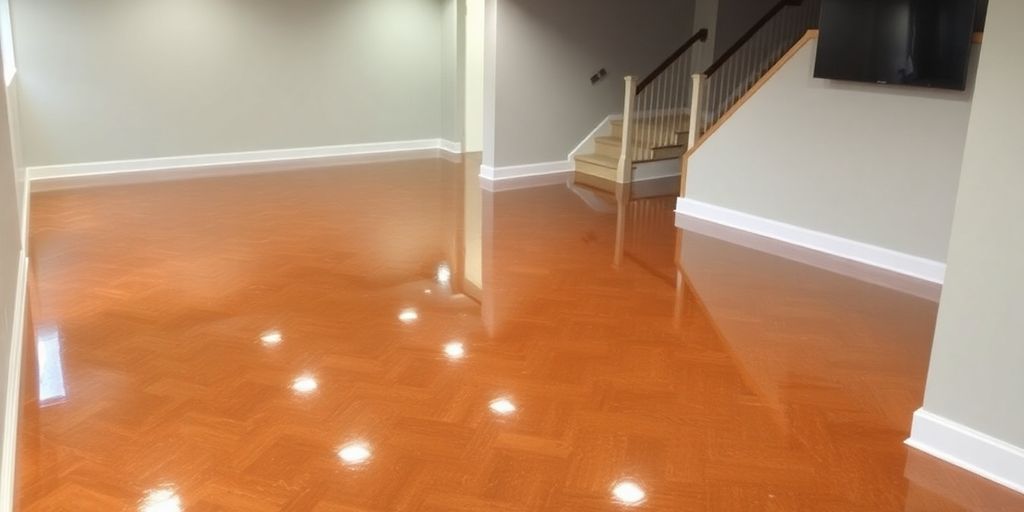
Okay, so you’re thinking about epoxy for your basement floor? The first thing everyone wants to know is, "How much is this gonna cost me?" Prices really jump around, from about $3 to $12 per square foot. What makes the price change so much? Well, it’s a mix of things. The kind of epoxy you pick is a big one. A basic epoxy coating will be cheaper, but if you want something fancy like a metallic finish, expect to pay more. Also, what shape is your current floor in? If it’s cracked and uneven, you’ll need to fix that first, which adds to the cost. And, of course, are you doing it yourself or hiring someone?
DIY vs Professional Installation
Alright, DIY or Pro? That’s the big question. If you’re pretty handy and have done projects before, doing it yourself can save you some cash. But, heads up, it’s not as easy as those YouTube videos make it look. Messing it up can lead to problems later, like the floor peeling or cracking. Hiring a pro costs more upfront, but you’re paying for their experience. They’ll make sure it’s done right, and that can save you headaches (and money) down the road.
Consulting with Professionals
Getting a pro’s opinion is always a good idea. They can look at your basement and tell you exactly what needs to be done. Plus, they can give you a real quote, so you know what to expect. Don’t be afraid to get a few quotes from different companies. It’s like shopping around for anything else – you want to make sure you’re getting a fair price. They can also show you different metallic epoxy floors and help you pick the best one for your space.
Think of epoxy flooring as an investment. It’s not just about making your basement look nice (though it definitely does that!). It’s about adding value to your home and not having to worry about replacing the floor anytime soon.
Installation Process of Epoxy Flooring in Basements
Preparing Your Basement Floor
Okay, so you’re ready to get that epoxy down! First things first, you absolutely have to prep the floor. No shortcuts here, or you’ll regret it. The most important thing is to get the concrete super clean.
- Start by sweeping or vacuuming up all the loose debris. You don’t want any dust bunnies getting trapped in your beautiful new floor.
- Next, scrub the floor with a concrete cleaner to remove any grease, oil, or old coatings. Seriously, scrub it good.
- Inspect for cracks and patch them with a concrete filler. Those little imperfections will show through the epoxy if you don’t fix them now.
Making sure your basement floor is properly prepped is the most important step. If you skip this, you’re asking for trouble down the road. Trust me, I’ve seen it happen.
Mixing and Applying Epoxy
Alright, the floor is prepped, now for the fun part! Mixing and applying the epoxy. This is where you need to pay close attention to the instructions. Usually, you’ll be mixing a resin and a hardener. Get the proportions wrong, and you’re in for a bad time. Mix it thoroughly, but don’t take forever, because epoxy starts to set pretty quickly. Once it’s mixed, get it on the floor! Use a roller or squeegee to spread it evenly. If you’re adding any decorative flakes or color, now’s the time to do it. Just sprinkle them on while the epoxy is still wet. This is where you can really get creative and make it your own. Don’t forget to apply epoxy flooring solutions along the perimeter first, before rolling it on the rest of the floor.
Curing and Finishing Touches
Now comes the hardest part: waiting. The epoxy needs to cure, and this can take anywhere from 24 to 72 hours, depending on the product and the temperature. Don’t even think about walking on it during this time! Once it’s cured, you might want to add a topcoat for extra protection and shine. This will not only make it look even better, but it’ll also help it last longer. Think of it as a clear coat for your floor. And that’s it! You’ve got a brand new epoxy floor. Time to enjoy your transformed basement. Here’s a quick recap:
- Let the epoxy cure completely.
- Apply a topcoat for added protection.
- Admire your handiwork!
Maintaining Your Epoxy Basement Floor
Regular Cleaning Tips
Keeping your epoxy basement floor looking good isn’t hard, thankfully. Regular sweeping or vacuuming is your first line of defense. This gets rid of the dirt and grit that can scratch the surface over time. For a more thorough clean, grab a mop and use a mild detergent mixed with water. Harsh chemicals and abrasive scrubbers are a no-go – they can mess up the finish. A simple mix of dish soap and warm water usually does the trick without causing any harm.
Managing Spills and Stains
Even though epoxy is pretty tough against chemicals, it’s still a good idea to clean up spills right away. This helps prevent any potential staining or damage. Just wipe up the spill with a soft cloth or mop. For those stubborn stains that just won’t budge, try a gentle cleaner.
Long-Term Care for Epoxy Floors
To keep your epoxy floor in tip-top shape for years to come, here are a few things to keep in mind:
- Inspect your floor regularly for any signs of wear and tear, like cracks or chips. Catching these early can prevent bigger problems down the road.
- Consider applying a new topcoat every few years. This adds an extra layer of protection and keeps your floor looking fresh.
- Use mats or rugs in high-traffic areas to minimize wear and tear.
Taking care of your epoxy floor doesn’t have to be a chore. With a little bit of regular maintenance, you can keep it looking great for years to come. It’s all about being proactive and addressing any issues as soon as they arise.
Innovative Trends in Epoxy Flooring
Metallic Epoxy Finishes
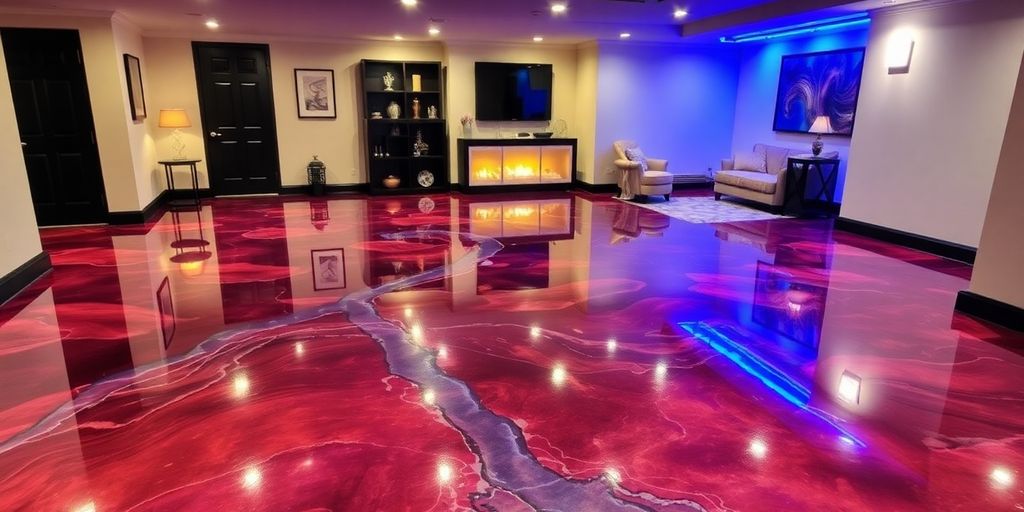
Metallic epoxy floors are super popular right now because they look so cool and different. They’re designed to look like liquid metal, which gives a 3D effect that can totally change how your basement looks. The swirling designs and bright colors make it look modern and sleek. If you want your basement to really stand out, this is the way to go. You can pick your own colors and designs, so your floor will be one of a kind. metallic finishes are a great way to add some flair.
Eco-Friendly Epoxy Options
More and more people care about the environment, so eco-friendly epoxy is becoming a big deal. These epoxies use low-VOC stuff, which is better for the planet and makes your indoor air cleaner. Choosing eco-friendly epoxy doesn’t mean you have to give up style or toughness. These floors are just as strong and pretty as the regular kind, so it’s a smart move if you want to be green without losing quality.
Custom Design Possibilities
Epoxy flooring lets you do all sorts of custom stuff. You can pick different colors, add decorative flakes, or even put things into the epoxy to make it really personal. Epoxy terrazzo is a cool option that mixes the classic terrazzo look with the strength of epoxy. This means you can get creative and make your basement floor a real piece of art. Customization makes sure your floor shows off your style and makes your home unique. You can explore integrated floor systems for a seamless look.
With so many new things happening in epoxy flooring, there’s no limit to what you can do. It’s a great way to make your basement look awesome and last for years.
Epoxy flooring is becoming more popular because it’s strong and looks great. People are using it in homes and businesses for a stylish and durable floor. You can choose from many colors and designs, making it easy to find the perfect look for your space. If you want to learn more about how epoxy flooring can change your home or business, visit our website for more information and a free quote!
Wrapping It Up
In conclusion, epoxy flooring can really change the game for your basement. It’s not just about making the space look good; it’s about creating a strong, practical area that you can actually use. With its durability and low maintenance needs, it’s a smart choice for anyone looking to upgrade. Whether you want to tackle the project yourself or hire someone, there are plenty of options to fit your style and budget. Just remember to prep your floor well and choose quality materials. If you take care of it, your new epoxy floor will serve you well for years. So, why wait? Get started on transforming your basement today!
Frequently Asked Questions
How long does epoxy flooring last in a basement?
With good care, epoxy flooring can last between 10 to 20 years or even longer.
Can I apply epoxy over my basement tiles?
Yes, you can put epoxy over tiles, but you need to prepare the tiles properly first.
What’s the best way to clean epoxy floors?
Use pH-balanced cleaners and avoid rough scrubbers that could scratch the floor.
How much does it cost to epoxy a basement floor?
The cost ranges from $3 to $12 per square foot, depending on the materials and design.
Is it possible to use epoxy on wood floors in the basement?
Yes, you can use special flexible epoxies that are made for wood surfaces.
Are epoxy floors slippery when wet?
Epoxy floors can be slippery when wet, but you can add materials to make them less slippery.